Get things done the easy way! Access this service smoothly on the AiOiA app. Download now and
enjoy hassle-free bookings!




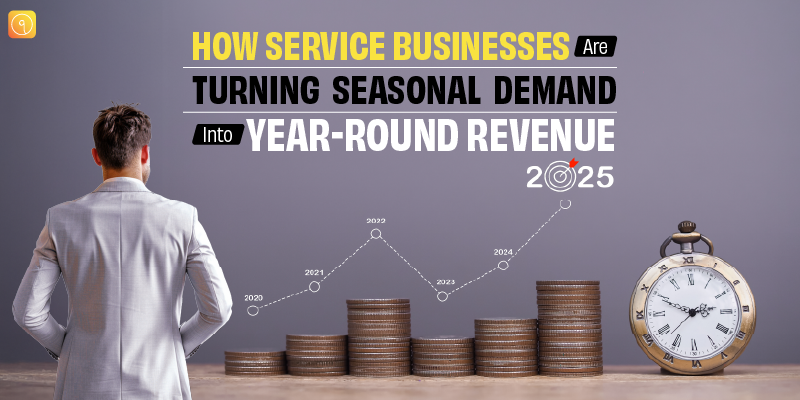
Seasonal demand is a common issue for many service businesses. While some months are slow, others are busy. Planning for growth and maintaining a consistent income may become challenging as a result. Even a prosperous company may have trouble during off-peak hours if they don't have the proper strategy.
It's critical to figure out how to sustain service business growth throughout the year. Businesses that only use peak seasons run the risk of losing steam and passing up chances to interact with clients. Because of this, smart business owners now place a high value on converting seasonal demand into year-round income.
These days, technology is essential to maintaining the smooth operation of services. Booking tracking, scheduling, and customer communication can all be streamlined with a service management app. Businesses can stay organized and get ready for both busy and slow seasons by using such apps.
In order to help businesses remain active throughout the year, this blog will examine doable tactics, off-season sales tactics, and revenue ideas. It will also demonstrate how business continuity for seasonal services can be supported with careful planning and the appropriate resources. Service companies can transform slow months into chances for consistent growth by implementing these strategies.
Seasonal demand describes the times of year when a service business is either very active or very inactive. For example, spring and summer are peak seasons for landscaping businesses, while winter is a slow season. Before holidays, cleaning services are frequently at their highest.
Months with fewer customers are also common in the tourism, HVAC, and related sectors. Business operations, planning, and revenue are impacted by these fluctuations.
If not adequately managed, fluctuating demand can impede the growth of service business revenue ideas. Revenue declines during slow times, but costs like supplies and employee salaries stay the same. Maintaining operations or making marketing investments may become challenging as a result. Even prosperous companies may experience cash flow issues if they don't plan.
To convert seasonal demand into income, planning is essential. Businesses can identify trends, forecast busy and slow months, and make well-informed decisions by using historical data. Revenue can be maintained more consistently by using tools like a top service management app, which can track reservations, manage schedules, and remind customers to make reservations in advance.
Using off-season booking strategies during slow times keeps customers interested. Providing bundled services, loyalty benefits, or early bird discounts encourages customers to make reservations even during periods of low demand. This strategy improves client relationships in addition to revenue.
Businesses can broaden their product offerings to guarantee seasonal services continue to operate. Adding year-round services keeps cash flow consistent and closes revenue gaps. Businesses can monitor performance, maximize resources, and find new strategies for service business growth by combining this with the help of a management app.
Service companies can minimize the effects of slow months, sustain steady growth, and remain profitable all year long by understanding seasonal demand and implementing astute strategies.
It's time to investigate workable strategies for turning seasonal demand into year-round revenue, now that we know how it impacts operations and business growth. Businesses can sustain a consistent revenue stream all year long by implementing astute strategies.
Peak seasons are crucial for a lot of service businesses. Even though income is high during these months, cash flow issues may arise during slow months. Businesses can maintain their financial stability by converting seasonal demand into revenue. Additionally, it facilitates staff retention, marketing planning, and growth investment without waiting for busy times.
Maintaining client engagement throughout the year is one of the best strategies for turning seasonal demand into year-round revenue. Customers are encouraged to return through personalized offers, check-ins, and regular communication. For instance, during customarily slow months, a cleaning service may provide monthly packages that have been pre-booked. This maintains income and boosts customer confidence in the company.
Data analysis is one of the effective strategies for service business growth. Businesses can schedule deals and promotions ahead of slow times by looking at previous reservations and spotting trends. This method aids in creating off-season sales plans that are successful. Businesses can launch new services or package deals that appeal to clients all year long by using insights from customer behavior.
Using off-season booking strategies is a beneficial way to maintain consistent revenue. Customers are encouraged to make reservations in advance with early bird discounts, loyalty plans, and flexible scheduling options. Packages designed for slow months work well for seasonal businesses. A professional service management app can track reservations, automate reminders, and make sure customers never forget to make a reservation.
An excellent service management app isn't limited to times of high demand. It facilitates effective service scheduling, client activity tracking, and customer contact during slow months. By making it simpler to launch new services, run promotions, or remind clients to make reservations in advance, the use of such tools can directly support service business revenue ideas.
When turning seasonal demand into year-round revenue, flexibility is essential. Companies should plan several approaches for slow times, evaluate which offers are most effective, and modify prices or services as necessary. Even when demand naturally declines, revenue is maintained by combining technology and careful planning.
Effective strategies for service business growth can turn slow months into opportunities by concentrating on customer relationships, utilizing data, and utilizing tools such as management apps. These tactics foster the expansion of service-oriented businesses and establish a solid basis for sustained prosperity.
The following section discusses reliable off-season strategies for service business growth that support consistent revenue even in lean months.
During slow months, many service businesses face difficulties. Planning off-season sales tactics that draw customers even when demand declines is crucial to sustaining a consistent revenue stream. Businesses can maintain revenue flow, improve customer relations, and foster long-term service business growth by employing innovative strategies.
Offering pre-booking or early-bird discounts is a good way to increase revenue. In order to fill slow times, customers are urged to schedule services in advance. A salon business might, for instance, provide reduced prices for reservations made prior. It is one of the key business strategies to boost salon business.
Increasing customer loyalty is essential to the expansion of service businesses. Offering discounts, freebies, or points to loyal customers encourages them to make additional reservations during off-peak hours. Incentives for referrals also help the company acquire new clients, which boosts service business revenue. An app for professional service management can keep track of incentives and remind customers to take advantage of deals.
Another clever strategy to boost revenue is to create service bundles. A cleaning service might, for instance, provide an annual package that includes deep cleaning in the off-peak months. Bundles secure income for the company while offering value to customers. They support seasonal services' business continuity and are a crucial component of off-season booking strategies.
It is simpler for customers to make reservations during slower months when flexible scheduling is available. More bookings may result from the convenience of offering weekend, evening, or adjustable time slots. Implementing these off-season sales tactics is made easier by a top service management app that can streamline scheduling, send reminders, and cut down on missed appointments.
When demand is low, temporary promotions or exclusive offers keep customers interested. Seasonal specials or limited-time offers may persuade reluctant clients to schedule services. Clients are guaranteed to receive timely notifications and reminders when promotions are combined with a management app. These tactics help businesses stay busy during slow months while turning seasonal demand into year-round revenue.
Service businesses can sustain growth and secure revenue ideas all year long by combining promotions, flexible scheduling, loyalty programs, early-bird offers, and service bundles. These kinds of off-season sales tactics transform slow months into chances for consistent revenue and improved customer relations.
After applying off-season sales strategies, the next step is ensuring stability all year. Let’s look at some smart continuity strategies for seasonal business services that keep operations running smoothly, even when demand slows down.
Careful planning is necessary to maintain revenue during slow months. When demand declines, businesses can continue to operate and make money thanks to business continuity for seasonal services. Service companies can safeguard income, keep customers, and get ready for expansion by employing astute tactics.
Diversifying the services provided is one of the best strategies to ensure business continuity for seasonal services. For instance, a landscaping business might offer year-round garden care or snow removal in the winter. Providing services that are required during off-peak hours keeps employees productive and supports the growth of service businesses.
Using membership or subscription models for a service business generates a steady income. A cleaning service might, for example, provide a monthly package that ensures frequent visits. These models help with seasonal revenue and encourage clients to remain involved throughout the year. It's easier to keep track of subscriptions and handle recurring payments when you use a professional service management app.
Cross-selling and upselling are additional revenue-generating strategies for service businesses. During slow months, encouraging customers to try more services increases revenue. For instance, a spa might provide product bundles or additional treatments. Implementing these tactics is made simpler by the ability of a top service management app to track customer preferences and recommend the best deals.
For seasonal services, keeping trained employees on board during slow months helps ensure business continuity. Employees can receive training in administrative duties, customer service, or new services. This helps increase overall efficiency and guarantees the team is prepared when demand increases. By efficiently scheduling employees, a service management app can prevent downtime and maintain seamless operations.
Maintaining service business growth during off-peak times requires flexibility. Companies should be ready to modify services, schedules, or prices in response to customer demands and industry developments. Quick adjustments and improved revenue stream monitoring are made possible by the use of technology.
Businesses can ensure continuity for services through staff training, subscriptions, cross-selling, service diversification, and flexibility planning. To take it a step further, the next section explores how using a service management app can help drive consistent growth and simplify everyday management.
When it comes to managing slow times, technology is essential for service businesses. Tracking client activity, streamlining scheduling, and increasing overall productivity are all made possible by a service management app.
Businesses can sustain service business growth and strive to convert this demand into revenue by utilizing the appropriate tools.
Off-peak months present difficulties for a lot of service businesses. Without the right tools, managing employees, keeping track of appointments, and interacting with clients can become challenging. Businesses can stay organized, cut down on mistakes, and increase customer satisfaction by using the key features of the top service management app. This enhances long-term growth and directly supports seasonal services' business continuity.
Scheduling, automated reminders, customer support, payment processing, and analytics are all essential components of the app. These characteristics guarantee that income continues to flow even during periods of low demand and facilitate the implementation of off-season booking strategies. Additionally, automation saves time, freeing up business owners to concentrate on expansion and planning.
During slow months, service business growth can be sustained with automation via management apps. Automated follow-ups, promotions, and reminders keep customers interested. This strategy encourages repeat business and loyalty, which helps with off-season sales tactics and service business revenue ideas.
Businesses can track customer behavior, keep an eye on trends, and evaluate historical performance with the help of a service management app. This data aids in identifying potential new service opportunities and planning booking strategies. Data-driven choices increase productivity and contribute to turning seasonal demand into year-round revenue.
The customer experience is enhanced when a top service management app is used. Customers can conveniently schedule services, get reminders, and take advantage of promotions. Year-round business growth is supported, and repeat business is encouraged by a seamless and professional experience.
Businesses can automate processes, monitor data, and interact with customers even during slow months by utilizing technical solutions. These tools make it easier to maintain seasonal services by assisting in the implementation of off-season sales strategies, increasing efficiency, and generating new revenue ideas.
The next section shares practical service business revenue ideas that work all year to keep profits flowing.
If they prepare properly, even seasonal service businesses can make money during slow months. Investigating potential revenue streams for service businesses aids in sustaining business expansion and guarantees consistent cash flow. Businesses can maintain customer engagement and optimize revenue throughout the year by fusing innovative offerings with astute planning.
Bundling services to provide greater value is one efficient strategy. A cleaning service might, for instance, mix seasonal chores or deep cleaning with routine cleaning. In order to support the generation of revenue and ensure business continuity for seasonal services, bundled packages encourage customers to make reservations during customarily slow times.
During off-peak times, increasing the target audience can increase revenue. Companies can advertise their services to various industries, neighborhoods, or demographics. For instance, when residential demand declines in the winter, a landscaping company may focus on commercial properties. These strategies for service business growth are a component of off-season sales.
New opportunities may arise from partnerships with complementary service providers. Such can be done with the help of a multiservice app for businesses. For example, a cleaning service might offer joint packages with an interior decorator or a pest control company. This strategy benefits customers, promotes recurring business, and supports ideas for service business revenue all year long.
Maintaining consistent revenue during slow months can be achieved by implementing strategic promotions and modifying pricing. Providing exclusive packages, price breaks, or temporary offers incentivizes customers to make reservations in advance. Effective off-season booking strategies can be more easily implemented with the help of management apps, which can track these offers and automate reminders.
Hearing what customers have to say can lead to new revenue opportunities. Customer feedback may include recommendations for new services, practical scheduling options, or desired packages. Businesses can create revenue-generating ideas for their service businesses that are effective throughout the year and support their growth even in the face of naturally fluctuating demand by incorporating this input.
Service businesses can apply service business revenue ideas that sustain growth by combining services, focusing on new clients, working with partners, utilizing promotions, and utilizing feedback. These tactics help to improve business continuity and convert it into revenue. The next section highlights key strategies for service business growth in the digital era.
The way that service businesses function has been altered by digital tools. Even in lean months, they can continue to grow by making effective use of technology. By integrating marketing, automation, and analytics, companies can develop service businesses and execute off-season sales tactics that maintain consistent revenue throughout the year.
During slow times, clients are kept interested in digital marketing. By promoting reservations during months with typically low demand, these techniques assist off-season sales strategies. Customers are reminded of services and promotions through online advertisements, email newsletters, and social media. These campaigns can be linked with a top service management app to track responses and automate reminders.
Making decisions based on data helps businesses plan more efficiently. Companies can modify services or prices during slow months by monitoring customer behavior, previous reservations, and revenue trends.
This encourages a focus on predictive scheduling and converting seasonal demand into year-round income, and boosts the expansion of service businesses as a whole. Gathering and evaluating this data is made easy with the help of a top service management app.
Workload is decreased, and consistency is guaranteed by automation. An application for service management can be used to automatically handle scheduling, follow-ups, and reminders. This helps implement off-season booking and allows staff to focus on delivering services and finding new ways to generate service business revenue ideas.
Personalized offers maintain customer interest. Sending custom promotions or targeted discounts during slow months encourages repeat bookings. A professional service management app can track client preferences and recommend relevant services. This approach not only maintains revenue but also strengthens business continuity for seasonal services.
Using online booking, mobile apps, and client portals makes it easy for customers to schedule services anytime. This convenience increases off-season engagement and supports service business growth. A management app centralizes all operations, making it easier to manage bookings, track revenue, and plan future service business revenue ideas.
By combining digital marketing, data analytics, automation, personalized offers, and online tools, service businesses can maintain growth year-round. These strategies help implement sales strategies, support turning seasonal demand into year-round revenue, and strengthen business continuity.
Next, we will explore the future trends for sustaining business continuity for seasonal services and how to stay ready for changing market demands.
Service businesses must plan for the future to maintain consistent revenue. An understanding of future booking trends and the adoption of new tools can help companies maintain business continuity for seasonally dependent services. Businesses help service business growth and continue to convert seasonal demand into annual revenue through technology, predictive insights, and modern business best practices.
Predictive analytics helps a business forecast client necessities. By identifying past trends and considering seasonal patterns, companies can conduct promotions, plan for staff, and give them services when they are most needed. Giving this boost to off-season sales strategies sustains the long run for business growth. A service management app can ease the gathering of these insights and their implementation.
The subscription economy is increasingly gaining prominence in service businesses. Recurring packages secure income during slow months. For instance, cleaning or landscaping services may provide monthly packages, supporting service business revenue ideas, and creating an avenue for businesses to convert the demand into year-round revenue.
Automation and AI tools reduce monotonous tasks and increase efficiency in business operations. Such things as scheduling, reminders, and customer communication are handled automatically. Businesses can take control of their growth. Generally, top service management apps have AI-powered features that help track bookings, optimize staffing, and better the client experience, hence benefiting the continuity of seasonal services.
Keeping clients is paramount to prioritization. Repeat bookings will be encouraged with special offers, loyalty rewards, and timely communication, continuing business growth while staggering effective strategies for off-season booking. Such approaches focus on ensuring customer engagement after service. A professional service management app will be easier to operate and track customer preferences and engagement.
The digital-first strategies for service business growth keep it competitive in the market. Therefore, online appointment scheduling, mobile apps, and client portals become must-haves. These tools support revenue ideas and make it easier they implement plans to carry seasonal demand into year-round revenue.
Combining predictive analytics, subscriptions, automation, customer retention, and digital-first points of interest ensures seasonal services for service businesses. Furthering these future trends keeps the service business growing, parks the implementation of off-season sales strategies, and brings profitability into slow months.
Managing a service business can be very challenging, especially during slow months. AiOiA is the management app meant for business growth and turning seasonal demand into year-round income. Scheduling, client communication, and bookings become easy tasks with AiOiA.
AiOiA has been equipped with scheduling, reminder automation, client management, payment processing, and performance analysis capabilities-an excellent service management app for any business wishing to stay organized and profitable throughout the year. The app helps deploy off-season booking strategies, simultaneously engaging clients throughout slow months.
For businesses, AiOiA helps owners maintain their time well, reducing human errors, to concentrate on growth strategies. It assists with analytics in the planning of off-season sales to promote revenue ideas that will sustain the seasonal service operations. For clients, it gets easy to book a service through AiOiA, get reminders, and grab promotions.
AiOiA makes running a service business easy, reliable, and efficient. Thus, with the professional service management app AiOiA, businesses can function smoothly in the off-season, with revenue ideas, and seasonal service continuity to present an opportunity for the monsoon.
Service businesses do not have to rely only on busy seasons to succeed. By focusing on turning seasonal demand into year-round revenue, companies can maintain their business growth and secure steady income throughout the year.
Implementing sales strategies, diversifying services, and creating revenue ideas help fill slow periods. Using technology like a management app simplifies scheduling, client communication, and performance tracking. This ensures business continuity for seasonal services and strengthens overall operations.
Building long-term relationships with clients is equally important. Personalized offers, loyalty programs, and regular engagement keep customers returning even during traditionally slow months. These practices support off-season booking strategies and contribute to sustainable growth.
Adopting modern tools and innovative strategies prepares service businesses for the future. Predictive analytics, automation, and digital-first solutions make managing slow months easier and provide insights for improving services. A top service management app can help businesses implement these strategies effectively, improving efficiency and client satisfaction.
By combining smart planning, creative revenue ideas, and the right technology, service businesses can transform seasonal challenges into opportunities. Maintaining business growth, implementing off-season sales strategies, and using tools like AiOiA ensure that every month contributes to long-term success.
Seasonal demand occurs when service requests increase or decrease at certain times of the year. Understanding it helps businesses plan off-season sales strategies, maintain service business growth, and find ways to generate income even during slow months.
Businesses can maintain service business growth by diversifying offerings, creating service business revenue ideas, and using off-season booking strategies. Technology, like a professional service management app, also helps track clients and schedule services throughout the year.
Off-season sales strategies include offering early-bird discounts, loyalty rewards, service bundles, and flexible scheduling. These approaches help businesses maintain business continuity for seasonal services and encourage clients to book during traditionally slow periods.
A service management app simplifies scheduling, reminders, client communication, and tracking revenue. Using a service management app or professional service management app ensures smoother operations, supports off-season booking strategies, and helps maintain service business growth.
Businesses can bundle services, target new customer segments, collaborate with complementary providers, and offer subscription plans. These service business revenue ideas help maintain turning seasonal demand into year-round revenue and support overall service business growth.
Technology, including a professional service management app, helps automate scheduling, track client activity, and plan promotions. It supports off-season sales strategies, maintains service business growth, and ensures business continuity for seasonal services even during slow months.


.png)

AiOiA is the ultimate appointment booking system, offering seamless scheduling and effortless table reservations to enhance your business efficiency.